10 Nov
Welcome to Max
I teased a couple of you with a Very Hard Mate In One last week, and found another one.
I have collected some more! 21 more in fact.
I’m a bit bored of writing this, but the result doesn’t reflect the closeness of the contests! Great result by Reece, saving us from the whitewash, but some great moves and terrific heart shown by all.
Another close match, well done to all!
Board 1
Board 2
Board 3
Board 4
“What’s this piece called?”
“A Bishop.”
“What is it in Spanish, Sophie?”
“Alfil”
“And in French, Agathe?”
“Fou!”
Therein lies a story…
The old Arab form of chess had a piece called the elephant, which, unlike most elephants I know, could jump two squares at a time, diagonally. And ‘al-fil’ means the Elephant in Arabic (Pil in Persian).
But if you have a lump of stone, or wood, and you want to show that it is an elephant, you might carve two curving lines on it for tusks, or make two points on it to show the same.
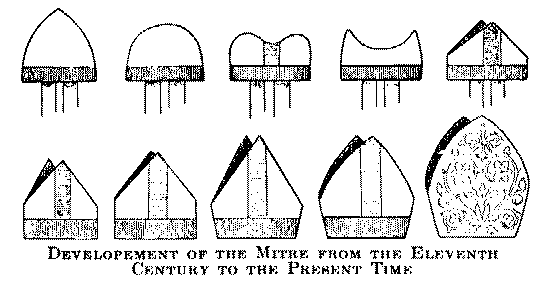
And if you then showed it to someone from England, you might hear them say, what’s that, a Bishop’s hat?

https://upload.wikimedia.org/wikipedia/commons/1/17/Mitre_evolution.gif
And if you showed it to someone from France, you might hear them say, what’s that, a hat for a jester, the court fool?
http://a401.idata.over-blog.com/0/26/53/98/logos/eeg.jpg
Here Bruno Fauditti has swapped a jester’s hat for a metal funnel:
https://fr.wikipedia.org/wiki/Temp%C3%AAte_sur_l%27%C3%A9chiquier
Now in modern Western chess, this piece doesn’t hop a little way, it can run right across the board. So the Germans adopted a different name for this piece, Läufer, the runner. There used to be played a version of chess in some parts of Germany which had both the old short-hopping Bishop, and the new long-running Currier, and that variant is called Courier Chess.
http://www.chessvariants.com/historic.dir/courier.html
There is a famous painting of some people playing this game:
https://en.wikipedia.org/wiki/Courier_chess#/media/File:Lucas_van_Leyden…
The Chinese form of chess still keeps the original piece with its original move; in fact, the name of the game, Xiang-Chi, means the Elephant Game.
A well-fought match which could have gone either way, with lots of good ideas shown by the players. I think in most games the advantage changed hands a couple of times – exciting stuff!
I’ve added the PGN file so you can play through the games and variations on your own computer.
Well, another rather lop-side score, but the games certainly weren’t
lopsided.
Click […] to see list
I had a nice chat at the Spring tournament with Dr Pasupalety and Mr Sequiera, both of whom grew up playing chaturanga. This is thought to be the ancestor of many types of chess played now across the world.
Chaturanga is a slow game, where the pawns can move only one square, there is no such thing as castling, and the Queen, called a Minister, is the weakest piece on the board! The Bishops (Camels, or in some places Elephants) also had a different move. When chess first came to Europe, it was in a form quite like this, and medieval chess had this same slow style.
When Western chess-players started experimenting in the opening in the 1920s, they invented some defences where Black stayed away from the centre for a while, and these set-ups look like the set-ups used in chaturanga. And that’s where we get the names King’s Indian Defence, Queen’s Indian Defence, and so on.
When I first looked at the history of Western Chess, I thought that the original game was Chaturanga, a game played in India before 600AD. Chess as played in other countries seems to come from the Arab form of Chess called Shatranj. And that is what I used to tell people.
But I now believe that the best picture that fits what we know says that Chaturanga and Shatranj were both later forms of an original game, which we don’t know much about. And whether China and Japan learned about chess from India or the Arab world, I don’t know.
We know lots about shatranj, because there is a lot of writing about it. Although the players were playing a different game, we can tell from their analysis that they were as good at shatranj as grandmasters are at chess. In fact, al-Suli composed a chess problem that took hundreds of years for anyone to solve!
I had thought of shatranj and chaturanga as part of chess history, so I was very tickled to meet people who had grown up with chaturanga as a living game.
There are lots of different sorts of chess around the world that seem to come from the same stock, including:
Each form of chess seems to have its own special rule that makes the game come alive. Burmese chess is the only sort of chess where you can decide where to put your pieces at the start of the game; Japanese chess is the only sort of chess that uses the ‘drops’ that we see in Exchange Chess; Chinese Chess is the only sort of chess that has the Cannon piece; modern Western Chess is the only sort of chess that has the super-duper Queen. (In fact, our game used to be called Le Jeu de la Dame enragée — the game with the Mad Queen!). Castling, and the double-first-move of the pawn, are also later inventions in the Western tradition.
You can read about all these different sorts of chess here:
http://chessvariants.org/
http://www.ancientchess.com/page/free-downloads.htm