Our Second Match
Well, another rather lop-side score, but the games certainly weren’t
lopsided.
Click […] to see list
Ken Bloodworth, who donated the Cup for this junior chess league, died just over a week ago aged 96, playing chess even in his last year. A wonderful man and a player, who did so much for junior chess, not just in Devon but all over Britain.
Obituary at Keverel Chess: http://www.keverelchess.com/ken-bloodworth-1914-2011/
Biography at Keverel Chess: http://www.keverelchess.com/k-j-bloodworth-25-06-1914/
{This back-and-forth game was settling into a tense endgame when White allowed
a snap mate. Both sides allowed and missed chances!}
{Black won a pawn and a piece early on and steered the game to a calm win.}
{ White grabbed a loose piece but lost it back to a neat Black tactic. White came up with a tactic of his own to win the exchange, and swapped off to win.}
{Some loose play by Black gave White a pawn in the opening, and White swapped
his way to the win.}
This agreeable annual match is always a friendly and well-contested occasion. As usual, most of the games, and therefore the match, could
have had a very different result! Well played all.
Board 1. After missing a chance to win a piece in the opening, White fell into a
wicked trap.
Board 2. After a murky opening, White lost the exchange. In trying to force a win,
Black gave back the exchange, but missed a win or two in the endgame.
Board 3. After some scrappy play, Black emerged a piece ahead, but allowed his Knight
to get sidetracked and his King exposed. All credit to White for making
trouble!
Board 4. Rather a slow start by both players; a quick break in the centre might have
upset Black. The game was decided by an amazing double blunder on move 30.
“What’s this piece called?”
“A Bishop.”
“What is it in Spanish, Sophie?”
“Alfil”
“And in French, Agathe?”
“Fou!”
Therein lies a story…
The old Arab form of chess had a piece called the elephant, which, unlike most elephants I know, could jump two squares at a time, diagonally. And ‘al-fil’ means the Elephant in Arabic (Pil in Persian).
But if you have a lump of stone, or wood, and you want to show that it is an elephant, you might carve two curving lines on it for tusks, or make two points on it to show the same.
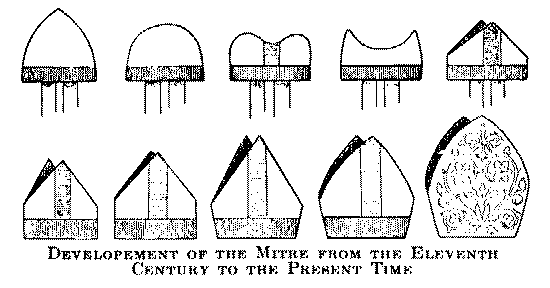
And if you then showed it to someone from England, you might hear them say, what’s that, a Bishop’s hat?

https://upload.wikimedia.org/wikipedia/commons/1/17/Mitre_evolution.gif
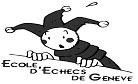
And if you showed it to someone from France, you might hear them say, what’s that, a hat for a jester, the court fool?
http://a401.idata.over-blog.com/0/26/53/98/logos/eeg.jpg
Here Bruno Fauditti has swapped a jester’s hat for a metal funnel:
https://fr.wikipedia.org/wiki/Temp%C3%AAte_sur_l%27%C3%A9chiquier
Now in modern Western chess, this piece doesn’t hop a little way, it can run right across the board. So the Germans adopted a different name for this piece, Läufer, the runner. There used to be played a version of chess in some parts of Germany which had both the old short-hopping Bishop, and the new long-running Currier, and that variant is called Courier Chess.
http://www.chessvariants.com/historic.dir/courier.html
There is a famous painting of some people playing this game:
https://en.wikipedia.org/wiki/Courier_chess#/media/File:Lucas_van_Leyden…
The Chinese form of chess still keeps the original piece with its original move; in fact, the name of the game, Xiang-Chi, means the Elephant Game.
{A terrific scrap where both sides took and missed their chances. In the end
the struggle with the 32 pieces on the board was decided as much by the clock
as by the moves.}
{White played an unknown system and got a bit lost. Trying to save a pawn,
White lost one piece and should have lost another. The position settled down
with Black dominant, and White never really had a chance.}
See also: http://exeterchessclub.org.uk/content/making-it-you-go-along
{Black wins a pawn but misses a discovery to lose a piece. Black keeps going
and eventually finds a perpetual check.}
{White started very well but the position became blocked and difficult.
Trying to get something going, you played a poor move, and things then went
from bad to worse.}
Pengxiao Zhu took part in the British Online Chess Championships in August, winning the U10 Blitz trophy and a Performance Prize for the U10 Rapidplay competition.
Many congratulations to Pengxiao from everyone at Devon Junior Chess!
Another close match which could have gone either way.
Some homework study may be required!
{Some simple tactics decided this game. In fact, they are the tactics most
often missed in junior games: discovered check, outnumbered, undermining.}
{WARNING: This next game contains uncut scenes of graphic chess violence. The part of Ming
the Merciless was played by Taylor Finch.}
{A great fightback after losing your way in an unfamiliar opening.}
{In a line you hadn’t faced before, you struggled to find a way to complete
development and be able to keep going forward. In the end, the squares you
lost on the board were less important than the minutes you lost on the clock.}