Oct 6
A different sort of puzzle today from Mr Lees: you are given the first move, but why is it clever?
Having won our other two matches, we went into our last game with league
victory assured, and so we ventured a younger team against Broadclyst
Primary School, who for so long have been the core of Devon’s junior
squad.
When Ethan missed the start and Henry out-tricked himself, it looked as
though we were going to struggle for any sort of result. Oliver set up
a solid fortress while Redmond went fishing for chances against his
opponent’s King. After Redmond hooked a mate and Oliver’s castle was
breached, we went home with just one point.
Ethan finally found the venue, and salvaged some honour by defeating the
home side’s top board in a friendly game.
Games to follow!
Well, another rather lop-side score, but the games certainly weren’t
lopsided.
Click […] to see list
Welcome back to some old friends we missed last week, and a warm welcome to Reuben, Dylan and Teddy.
Sorry I didn’t get around to printing a rating list this week — Tuesday proved to be a longer day at work than I expected! — but they’re all there on the website and updated this evening.
A tale of three discoveries: a discovered attack proved the winning move in all three games.
Unmasked threats – discovered attacks and discovered checks – are the
most difficult threats to spot. You pay attention to the piece that
moves, but the threat comes from the piece behind.
I’ve attached a discovered attack training page – get your eye in! In 2010, the Devon U14 team lost an awful lot of points (or a lot of awful points) to discovered attacks, and the puzzles are all things that they missed.
{Some over-cautious play by Black gave White some chances early on, but it
fizzled out. White decided to save a pawn … but lost a Knight instead!
White then attacked very well and won the Exchange, leaving the balance Rook
against two minor pieces – about equal. But then Black sprang a deadly
discovery to win.}
{White’s home-made system against the Dragon got into a bit of a muddle, and
once it started going wrong, White jumped from the frying pan to the fire to
the furnace…}
{In a line Black was unsure about, White got an advantage in space and
development, which was used to put pressure on the Queen’s-side. After a big
chance was missed by White, the game fizzled out into a standard French
better-for-Black endgame, and Black took the chances that came by.}
A cracking start to the season, with Newton Abbot blooding some new talent. I hope this result doesn’t discourage them! In fact, the opposition board 1 scored ahead of the entire Exeter team at the Devon Championships, so as is often the case, the result is more lop-sided than the games.
Reece Whittington 1-0 Jim Knott
Taylor Finch 1-0 Ben Sanders-Wyatt
Edmund Kelly 1-0 Toby Donaghue
Leif Hafstad 1-0 Calum Germain
“What’s this piece called?”
“A Bishop.”
“What is it in Spanish, Sophie?”
“Alfil”
“And in French, Agathe?”
“Fou!”
Therein lies a story…
The old Arab form of chess had a piece called the elephant, which, unlike most elephants I know, could jump two squares at a time, diagonally. And ‘al-fil’ means the Elephant in Arabic (Pil in Persian).
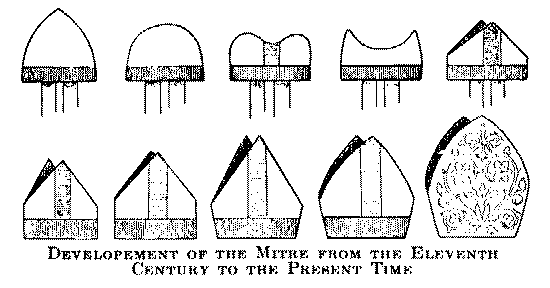
But if you have a lump of stone, or wood, and you want to show that it is an elephant, you might carve two curving lines on it for tusks, or make two points on it to show the same.
And if you then showed it to someone from England, you might hear them say, what’s that, a Bishop’s hat?

https://upload.wikimedia.org/wikipedia/commons/1/17/Mitre_evolution.gif
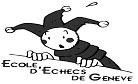
And if you showed it to someone from France, you might hear them say, what’s that, a hat for a jester, the court fool?
http://a401.idata.over-blog.com/0/26/53/98/logos/eeg.jpg
Here Bruno Fauditti has swapped a jester’s hat for a metal funnel:
https://fr.wikipedia.org/wiki/Temp%C3%AAte_sur_l%27%C3%A9chiquier
Now in modern Western chess, this piece doesn’t hop a little way, it can run right across the board. So the Germans adopted a different name for this piece, Läufer, the runner. There used to be played a version of chess in some parts of Germany which had both the old short-hopping Bishop, and the new long-running Currier, and that variant is called Courier Chess.
http://www.chessvariants.com/historic.dir/courier.html
There is a famous painting of some people playing this game:
https://en.wikipedia.org/wiki/Courier_chess#/media/File:Lucas_van_Leyden…
The Chinese form of chess still keeps the original piece with its original move; in fact, the name of the game, Xiang-Chi, means the Elephant Game.