Exeter Juniors 1-2 Sidmouth B

A tale of three discoveries: a discovered attack proved the winning move in all three games.

Unmasked threats – discovered attacks and discovered checks – are the
most difficult threats to spot. You pay attention to the piece that
moves, but the threat comes from the piece behind.

I’ve attached a discovered attack training page – get your eye in! In 2010, the Devon U14 team lost an awful lot of points (or a lot of awful points) to discovered attacks, and the puzzles are all things that they missed.

{Some over-cautious play by Black gave White some chances early on, but it
fizzled out. White decided to save a pawn … but lost a Knight instead!
White then attacked very well and won the Exchange, leaving the balance Rook
against two minor pieces – about equal. But then Black sprang a deadly
discovery to win.}

{White’s home-made system against the Dragon got into a bit of a muddle, and
once it started going wrong, White jumped from the frying pan to the fire to
the furnace…}

{In a line Black was unsure about, White got an advantage in space and
development, which was used to put pressure on the Queen’s-side. After a big
chance was missed by White, the game fizzled out into a standard French
better-for-Black endgame, and Black took the chances that came by.}
Similar Posts

  • Our Second Match

    Well, another rather lop-side score, but the games certainly weren’t
    lopsided.

    Click […] to see list

  • The 65th square

    The secret of Grandmaster play is to make use of the hidden 65th square on the chess board. I’m sure you’ve all had the experience of having a piece come at you, apparently out of nowhere, to take one of your army. That piece came from the 65th square.

    I can’t show you the square, because it’s not on the usual 8×8 grid system, but I can show you that it is there. Watch…

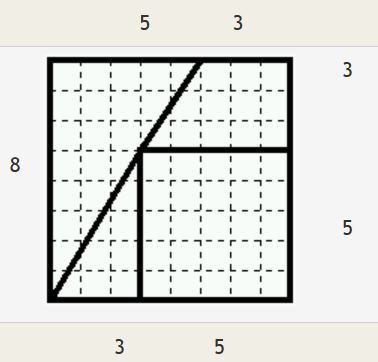
    Take a 8×8 chessboard (64 squares, right?), and divide it up in a special way:

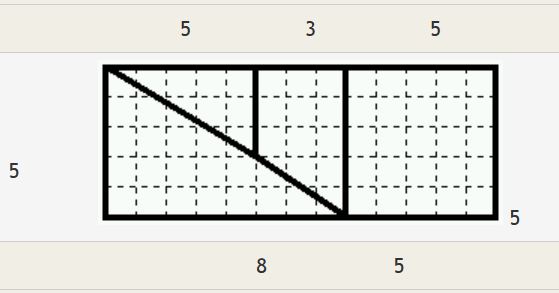
    These can be rearranged to make a rectangle. 

    But of course, the 5×13 rectangle has 65 squares. I’m not sure which one is the extra square… but now you know it’s there, you can maybe use it in your games!

    (Post inspired by Ivor Annetts, but puzzle devised by Sam Loyd, I believe.)

  • Exeter Juniors (1-3) Exeter School, 11th March 2011

    Lots to enjoy in an evenly matched contest.

    Board 1

    {A well-played game by both sides. We don’t see close endgames very often in
    junior chess, and this was a fine one.}

    Board 2

    {Black gets a plus in the opening but gets his wires crossed.}

    Board 3

    {The two sides emerge from a stodgy old opening into a stodgy old middlegame
    and then a roughly level endgame. White adds some interest by losing a piece
    (and it could have been worse!) but makes good use of his chances and
    eventually brings off a swindle.}

    Board 4

    {The game was close for quite a while, with one side then the other looking
    better. Black lost a piece but correctly went on the attack, looking for
    tactics or a perpetual. White survived all the threats and spotted a chance
    for checkmate, and it was all over.}

  • Our first match

    Our First Match

    Well, ouch! We lost four-nil, but I hope you thought that, however
    big and strong they were, they weren’t that much better than us, and
    they didn’t do anything very special to beat us. (Is that a good
    thing?)  But I was very pleased and proud with how well you
    played, how well you fought, and how well you concentrated.  It
    wouldn’t have needed much luck for us to come away with 2-2. 
    They’re just tall, that’s all…

    http://www.youtube.com/watch?v=di1-bB1w4wM

    In the end, we fell
    for a few simple tactics and there were a couple of chances that we
    missed, and that all comes with time and practice.
    The best books to start to practice spotting tactics are the blue one I
    wrote with Tim ([b]Chess Puzzles in One
    Move[/b]) and a yellow book by Tony Gillam, [b]Simple Chess Tactics[/b]. If you think
    those are too easy, try the website http://chess.emrald.net/

    These will help, but the main thing is to [b]think for both sides[/b]. There’s
    no point in spotting all the ideas for your side, but ignoring what
    your opponent can do to you.   Check each check and each
    capture on every move.

    Also, we do need some better openings to put pressure on our
    opponents. I have written a little guide that I think I’ve given to all
    the team players, but everyone can have a copy
    [url=/chessx/ftp/JuniorRepertoire.pdf]PDF[/url]
    if they like. The idea is
    to play the Scotch Gambit against 1…e5 and to go for IQP positions
    against everything else.

    [blockquote]
    “[em]There are no hopeless positions; there are only inferior positions
    that can be saved.

    There are no drawn positions; there are only equal ones in which you
    can play for a win.

    But at the same time, don’t forget that there is no such thing as a won
    position in which it is impossible to lose.[/em]”

    — Grigory SANAKOEV
    [blockquote]
    “[em]Playing safe is too dangerous[/em]” — Dr.Dave.

    Click on […] to see list

  • Exeter Juniors 1½-2½ Sidmouth UPDATED

    UPDATE: Taylor’s game added

    {White avoided an early Queen swap, which might have been a nuisance, but it
    was a move leading out of the frying pan into the fire.}

    {Black improvised in the opening and while trying to sort out the position
    wasted a lot of the time that should be used to develop and get castled.
    White crashed through the middle to win.}

    See also: http://exeterchessclub.org.uk/content/making-it-you-go-along

    {An early mistake by Black left White needing only to avoid an accident to win}

    {Black wasn’t playing badly but overlooked a few simple threats by White to go
    a Rook, a Knight and a few Pawns behind. White should have won easily enough
    after that but somehow lost hold of both the Rook and the Knight and then
    chose not to swap off the Queens. A draw was a generous outcome!}

  • |

    Puzzle corner

    Mr.B was always very good at producing a puzzle for us each week. Today’s puzzle comes from Mr.Lees — many thanks!

    You’re Black, and you can checkmate White in two moves (you move, White moves, then you play checkmate).

    SOLUTION: reveal by clicking the [ > ] button.