Exeter Juniors 3-1 Torquay Boys Friday 2nd May 2014

Exeter Juniors 3-1 Torquay Boys Friday 2nd May 2014

Edmund Kelly (B) 1-0 Yul Lee (W)
Taylor Finch 1-0 Alex Lee
Leif Hafstad 1-0 Ben Sturt
Codie Finch 0-1 Jakub Kubiak

The home side scored a quick win when Taylor Finch picked
up the black Queen using an ancient trap in the French Defence, but the visitors equalised soon after when Jakub Kubiak’s threat to the enemy King was ignored.

Leif Hafstad was never in trouble with his own French Defence, and was
happy to collect one pawn after another in a game where White
never looked comfortable.

Game of the day was a full-blooded struggle on top board, where
a cheeky pawn grab in a Sicilian Defence led to the usual trouble
surviving White’s extra development and activity. It looked certain
that White was going to wrestle back the pawn, but Black hung on and eventually swapped enough material to emerge into a winning Bishop endgame.

Yet the clock also had a say and, with Black’s hour almost up, a few hasty decisions nearly let the win slip. The evaluation of the position swung crazily between ‘Black win’ and ‘Draw’ almost move by move, but finally the extra pawn was promoted and Edmund delivered mate with seconds to spare.

Another great match, well-contested on all boards, and credit to all involved.


Similar Posts

  • 20 October — No club night next week!

    Welcome to James!

    No club night next week (27th October) for Half-term.

    I am copying old posts from old websites and reminded myself of Mr.B’s interest in Otto Blathy’s ‘grotesque’ chess problems, and tried one out this evening: the first one on this page – Grotesque!

    After tonight’s results, this half-term’s Rapid Rating Risers are Zayd, Jonah, Orestes, Ernest and especially Advaith — well done all!

  • Two puzzles


    (Black pawns coming down the board)

    (Black pawns going up the board)
    Bennett, Frederick — The Australasian


    Solutions:

    1.Bc6!

    1.Kf3!

  • Exeter Juniors (3-1) Newton Abbot Juniors 1st April 2011

    Ken Bloodworth, who donated the Cup for this junior chess league, died just over a week ago aged 96, playing chess even in his last year. A wonderful man and a player, who did so much for junior chess, not just in Devon but all over Britain.

    Obituary at Keverel Chess: http://www.keverelchess.com/ken-bloodworth-1914-2011/
    Biography at Keverel Chess: http://www.keverelchess.com/k-j-bloodworth-25-06-1914/

    {This back-and-forth game was settling into a tense endgame when White allowed
    a snap mate. Both sides allowed and missed chances!}

    {Black won a pawn and a piece early on and steered the game to a calm win.}

    { White grabbed a loose piece but lost it back to a neat Black tactic. White came up with a tactic of his own to win the exchange, and swapped off to win.}

    {Some loose play by Black gave White a pawn in the opening, and White swapped
    his way to the win.}

  • The 65th square

    The secret of Grandmaster play is to make use of the hidden 65th square on the chess board. I’m sure you’ve all had the experience of having a piece come at you, apparently out of nowhere, to take one of your army. That piece came from the 65th square.

    I can’t show you the square, because it’s not on the usual 8×8 grid system, but I can show you that it is there. Watch…

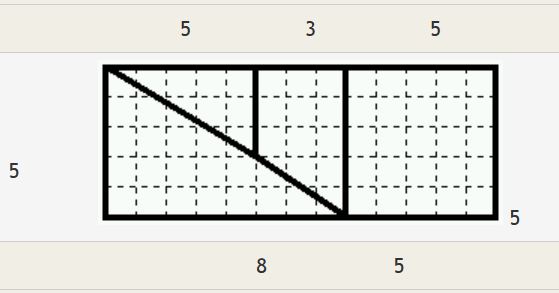
    Take a 8×8 chessboard (64 squares, right?), and divide it up in a special way:

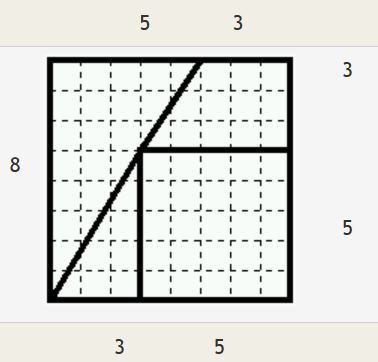
    These can be rearranged to make a rectangle. 

    But of course, the 5×13 rectangle has 65 squares. I’m not sure which one is the extra square… but now you know it’s there, you can maybe use it in your games!

    (Post inspired by Ivor Annetts, but puzzle devised by Sam Loyd, I believe.)

  • Chess around the world

    I had a nice chat at the Spring tournament with Dr Pasupalety and Mr Sequiera, both of whom grew up playing chaturanga. This is thought to be the ancestor of many types of chess played now across the world.

    Chaturanga is a slow game, where the pawns can move only one square, there is no such thing as castling, and the Queen, called a Minister, is the weakest piece on the board!  The Bishops (Camels, or in some places Elephants) also had a different move.  When chess first came to Europe, it was in a form quite like this, and medieval chess had this same slow style.

    When Western chess-players started experimenting in the opening in the 1920s, they invented some defences where Black stayed away from the centre for a while, and these set-ups look like the set-ups used in chaturanga.  And that’s where we get the names King’s Indian Defence, Queen’s Indian Defence, and so on.

    When I first looked at the history of Western Chess, I thought that the original game was Chaturanga, a game played in India before 600AD. Chess as played in other countries seems to come from the Arab form of Chess called Shatranj. And that is what I used to tell people.

    But I now believe that the best picture that fits what we know says that Chaturanga and Shatranj were both later forms of an original game, which we don’t know much about. And whether China and Japan learned about chess from India or the Arab world, I don’t know.

    We know lots about shatranj, because there is a lot of writing about it.  Although the players were playing a different game, we can tell from their analysis that they were as good at shatranj as grandmasters are at chess.  In fact, al-Suli composed a chess problem that took hundreds of years for anyone to solve!

    I had thought of shatranj and chaturanga as part of chess history, so I was very tickled to meet people who had grown up with chaturanga as a living game.

    There are lots of different sorts of chess around the world that seem to come from the same stock, including:

    • Shatar (Mongolian Chess)
    • Sittuyin (Burmese Chess)
    • Makruk (Thai Chess)

    Each form of chess seems to have its own special rule that makes the game come alive. Burmese chess is the only sort of chess where you can decide where to put your pieces at the start of the game; Japanese chess is the only sort of chess that uses the ‘drops’ that we see in Exchange Chess; Chinese Chess is the only sort of chess that has the Cannon piece; modern Western Chess is the only sort of chess that has the super-duper Queen. (In fact, our game used to be called Le Jeu de la Dame enragée — the game with the Mad Queen!).  Castling, and the double-first-move of the pawn, are also later inventions in the Western tradition.

    You can read about all these different sorts of chess here:
    http://chessvariants.org/
    http://www.ancientchess.com/page/free-downloads.htm

  • Exeter Juniors 1½-2½ Exeter Gambits

    Well, a loss for the juniors, but by the narrowest of margins, and
    against a team who were a bit stronger than they looked on paper. A
    couple of the Gambits players have had much higher grades in the past,
    and in the end I think experience told.