Exeter Juniors 2½-1½ Torquay Boys Grammar School

This agreeable annual match is always a friendly and well-contested occasion. As usual, most of the games, and therefore the match, could
have had a very different result! Well played all.

Board 1. After missing a chance to win a piece in the opening, White fell into a
wicked trap.

Board 2. After a murky opening, White lost the exchange. In trying to force a win,
Black gave back the exchange, but missed a win or two in the endgame.

Board 3. After some scrappy play, Black emerged a piece ahead, but allowed his Knight
to get sidetracked and his King exposed. All credit to White for making
trouble!

Board 4. Rather a slow start by both players; a quick break in the centre might have
upset Black. The game was decided by an amazing double blunder on move 30.

Similar Posts

  • |

    Puzzle corner

    Mr.B was always very good at producing a puzzle for us each week. Today’s puzzle comes from Mr.Lees — many thanks!

    You’re Black, and you can checkmate White in two moves (you move, White moves, then you play checkmate).

    SOLUTION: reveal by clicking the [ > ] button.

  • Said the Elephant to the Bishop…


    “What’s this piece called?”
    “A Bishop.”
    “What is it in Spanish, Sophie?”
    “Alfil”
    “And in French, Agathe?”
    “Fou!”

    Therein lies a story…

    The old Arab form of chess had a piece called the elephant, which, unlike most elephants I know, could jump two squares at a time, diagonally. And ‘al-fil’ means the Elephant in Arabic (Pil in Persian).

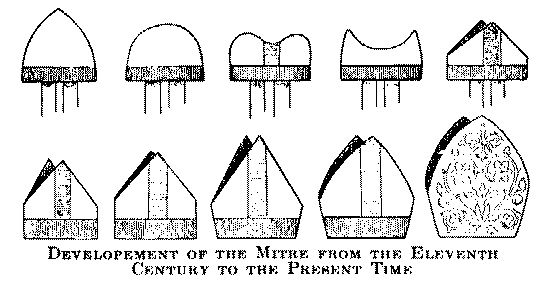
    But if you have a lump of stone, or wood, and you want to show that it is an elephant, you might carve two curving lines on it for tusks, or make two points on it to show the same.

    And if you then showed it to someone from England, you might hear them say, what’s that, a Bishop’s hat?

    https://upload.wikimedia.org/wikipedia/commons/1/17/Mitre_evolution.gif

    And if you showed it to someone from France, you might hear them say, what’s that, a hat for a jester, the court fool?

    http://a401.idata.over-blog.com/0/26/53/98/logos/eeg.jpg

    Here Bruno Fauditti has swapped a jester’s hat for a metal funnel:
    https://fr.wikipedia.org/wiki/Temp%C3%AAte_sur_l%27%C3%A9chiquier

    Now in modern Western chess, this piece doesn’t hop a little way, it can run right across the board. So the Germans adopted a different name for this piece, Läufer, the runner. There used to be played a version of chess in some parts of Germany which had both the old short-hopping Bishop, and the new long-running Currier, and that variant is called Courier Chess.

    http://www.chessvariants.com/historic.dir/courier.html

    There is a famous painting of some people playing this game:
    https://en.wikipedia.org/wiki/Courier_chess#/media/File:Lucas_van_Leyden…

    The Chinese form of chess still keeps the original piece with its original move; in fact, the name of the game, Xiang-Chi, means the Elephant Game.

    https://en.wikipedia.org/wiki/Xiangqi

  • Exeter Juniors 1-2 Sidmouth B

    A tale of three discoveries: a discovered attack proved the winning move in all three games.

    Unmasked threats – discovered attacks and discovered checks – are the
    most difficult threats to spot. You pay attention to the piece that
    moves, but the threat comes from the piece behind.

    I’ve attached a discovered attack training page – get your eye in! In 2010, the Devon U14 team lost an awful lot of points (or a lot of awful points) to discovered attacks, and the puzzles are all things that they missed.

    {Some over-cautious play by Black gave White some chances early on, but it
    fizzled out. White decided to save a pawn … but lost a Knight instead!
    White then attacked very well and won the Exchange, leaving the balance Rook
    against two minor pieces – about equal. But then Black sprang a deadly
    discovery to win.}

    {White’s home-made system against the Dragon got into a bit of a muddle, and
    once it started going wrong, White jumped from the frying pan to the fire to
    the furnace…}

    {In a line Black was unsure about, White got an advantage in space and
    development, which was used to put pressure on the Queen’s-side. After a big
    chance was missed by White, the game fizzled out into a standard French
    better-for-Black endgame, and Black took the chances that came by.}

  • Exeter Juniors 1½-2½ Sidmouth UPDATED

    UPDATE: Taylor’s game added

    {White avoided an early Queen swap, which might have been a nuisance, but it
    was a move leading out of the frying pan into the fire.}

    {Black improvised in the opening and while trying to sort out the position
    wasted a lot of the time that should be used to develop and get castled.
    White crashed through the middle to win.}

    See also: http://exeterchessclub.org.uk/content/making-it-you-go-along

    {An early mistake by Black left White needing only to avoid an accident to win}

    {Black wasn’t playing badly but overlooked a few simple threats by White to go
    a Rook, a Knight and a few Pawns behind. White should have won easily enough
    after that but somehow lost hold of both the Rook and the Knight and then
    chose not to swap off the Queens. A draw was a generous outcome!}

  • EJCC 2-2 Newton Abbot Juniors

    A match of mostly short games, where the outgraded Newton Abbot team
    must have been pleased to hold us off. There are some lessons about how
    to win a game here:

    1. Recognise when you are playing in a risky way – and do so only if you
    have to.
    2. Don’t be afraid of ghosts!
    3. If you like open games, then don’t close the position.

    You can download the games&notes in the PGN file.

    (1)

    {A shame to miss a win at the end, but you had the more promising
    position throughout, so don’t regret the missed win, take some pride in
    the good game! }

    {A short and cautious game, where both players found themselves in a strange
    part of town.}

    {I expect by now you have read Chess for Tigers and know what I meant! But
    just to be clear: If you think you’re the better player, don’t try and force
    the issue, let the chances come to you. If you take risks, you are giving your
    opponent chances. That may mean that you play in a different style to usual –
    often, you have to take some risks to beat someone your own strength.}

    {Both sides took and landed punches in this short but eventful game.}

  • Exeter Juniors (2½-1½) Seaton, 25th March 2011

    [Please ignore the stupid number of page visits, I think someone’s robot threw a wobbly]

    {
    White eventually took a loose pawn and played good aggressive chess to wrap up.
    }

    {Black had the advantage but allowed White to stop him castling, when there
    was always a mating attack up White’s sleeve.}

    {White made good use of his extra space and activity.}

    {Black let a pawn advantage slip through his fingers.}