• Exeter Juniors 1-2 Sidmouth B

    A tale of three discoveries: a discovered attack proved the winning move in all three games.

    Unmasked threats – discovered attacks and discovered checks – are the
    most difficult threats to spot. You pay attention to the piece that
    moves, but the threat comes from the piece behind.

    I’ve attached a discovered attack training page – get your eye in! In 2010, the Devon U14 team lost an awful lot of points (or a lot of awful points) to discovered attacks, and the puzzles are all things that they missed.

    {Some over-cautious play by Black gave White some chances early on, but it
    fizzled out. White decided to save a pawn … but lost a Knight instead!
    White then attacked very well and won the Exchange, leaving the balance Rook
    against two minor pieces – about equal. But then Black sprang a deadly
    discovery to win.}

    {White’s home-made system against the Dragon got into a bit of a muddle, and
    once it started going wrong, White jumped from the frying pan to the fire to
    the furnace…}

    {In a line Black was unsure about, White got an advantage in space and
    development, which was used to put pressure on the Queen’s-side. After a big
    chance was missed by White, the game fizzled out into a standard French
    better-for-Black endgame, and Black took the chances that came by.}
  • Exeter Juniors 2½-1½ Seaton

    Our first win! Even without the point from ‘super-sub’ Ray Shepherd, we had a draw in the bank, and that would have been a good result too.

    So, well done all round. In both other games there was a big chance for our side early on – so make sure you think right from the start, don’t ‘warm up’ during the game!

    {A bit of a tired performance by White: Black picked up pawns every few moves
    and went into an endgame four pawns ahead. There were a couple of chances to
    hit back, and the one on move 8 might have given a very different result.
    Look at every check and every capture, every move!}

    3. d4 is the move most likely to cause problems. Have a look at this page:
    http://exeterchessclub.org.uk/content/lessons-philidors-defence

    {Black never really got going and eventually forgot about a threatened piece;
    White actually had a chance to win a piece on move 6!}

  • Exeter Juniors ½-3½ Tiverton Testosterones

    {A terrific scrap where both sides took and missed their chances. In the end
    the struggle with the 32 pieces on the board was decided as much by the clock
    as by the moves.}

    {White played an unknown system and got a bit lost. Trying to save a pawn,
    White lost one piece and should have lost another. The position settled down
    with Black dominant, and White never really had a chance.}

    See also: http://exeterchessclub.org.uk/content/making-it-you-go-along

    {Black wins a pawn but misses a discovery to lose a piece. Black keeps going
    and eventually finds a perpetual check.}

    {White started very well but the position became blocked and difficult.
    Trying to get something going, you played a poor move, and things then went
    from bad to worse.}

  • Exeter Juniors 1½-2½ Sidmouth UPDATED

    UPDATE: Taylor’s game added

    {White avoided an early Queen swap, which might have been a nuisance, but it
    was a move leading out of the frying pan into the fire.}

    {Black improvised in the opening and while trying to sort out the position
    wasted a lot of the time that should be used to develop and get castled.
    White crashed through the middle to win.}

    See also: http://exeterchessclub.org.uk/content/making-it-you-go-along

    {An early mistake by Black left White needing only to avoid an accident to win}

    {Black wasn’t playing badly but overlooked a few simple threats by White to go
    a Rook, a Knight and a few Pawns behind. White should have won easily enough
    after that but somehow lost hold of both the Rook and the Knight and then
    chose not to swap off the Queens. A draw was a generous outcome!}

  • EJCC 1-3 Exeter Gambits 30th March 2012

    A close match ended in a 1-3 defeat for the youngsters. As so often in
    chess, it wouldn’t have taken much to reverse the score!

    The juniors, unusually, fielded a team which had a majority of girls.

    {1. A well-fought game: White got some attacking ideas muddled and lost a piece,
    but pressure won the exchange leaving an exciting RvNN endgame.}

    {2. A carefully-played game ended in a draw, but both sides missed good
    chances to go ahead.}

    {3. Black was allowed to launch a tactic to win a piece early on, after which White was not allowed much fun.}

    {4. Black grabbed a Rook but then seemed to run out of ideas; White then
    had an idea and Black missed it!}

  • Exeter Juniors 2-3 Torquay Boys’ Grammar School

    A well-fought match which could have gone either way, with lots of good ideas shown by the players. I think in most games the advantage changed hands a couple of times – exciting stuff!

    I’ve added the PGN file so you can play through the games and variations on your own computer.

  • EJCC 2-2 Newton Abbot Juniors 16th Dec 2011

    One of the best and best-contested matches I’ve had the pleasure to watch. Well done to all players!

    W Royle ½-½ Fraser
    B Trott ½-½ Whitehead
    S Keat 1-0 Ramesh
    B Terrill 0-1 Chornenkyy

    A tough game fought in the jungles of a hypermodern opening, in the end Black’s
    exchange was enough to balance an advanced passed pawn – or maybe the
    other way around!

    A wild game where both sides did enough to win…

    Some devilishly complicated opening play resulted in an early win of a
    piece for White.

  • The 65th square

    The secret of Grandmaster play is to make use of the hidden 65th square on the chess board. I’m sure you’ve all had the experience of having a piece come at you, apparently out of nowhere, to take one of your army. That piece came from the 65th square.

    I can’t show you the square, because it’s not on the usual 8×8 grid system, but I can show you that it is there. Watch…

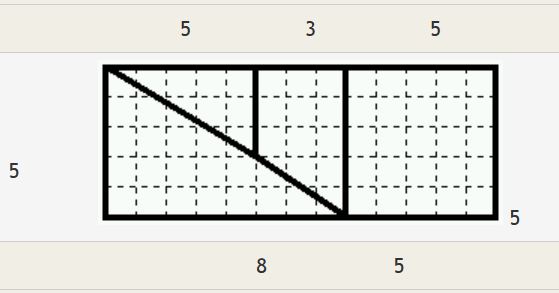
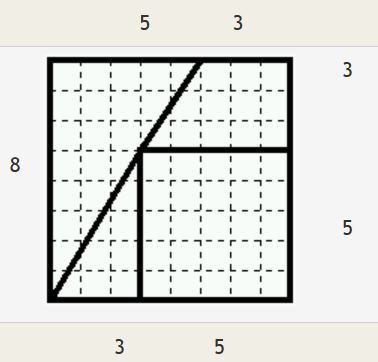
    Take a 8×8 chessboard (64 squares, right?), and divide it up in a special way:

    These can be rearranged to make a rectangle. 

    But of course, the 5×13 rectangle has 65 squares. I’m not sure which one is the extra square… but now you know it’s there, you can maybe use it in your games!

    (Post inspired by Ivor Annetts, but puzzle devised by Sam Loyd, I believe.)

  • Exeter Juniors (3-1) Newton Abbot Juniors 1st April 2011

    Ken Bloodworth, who donated the Cup for this junior chess league, died just over a week ago aged 96, playing chess even in his last year. A wonderful man and a player, who did so much for junior chess, not just in Devon but all over Britain.

    Obituary at Keverel Chess: http://www.keverelchess.com/ken-bloodworth-1914-2011/
    Biography at Keverel Chess: http://www.keverelchess.com/k-j-bloodworth-25-06-1914/

    {This back-and-forth game was settling into a tense endgame when White allowed
    a snap mate. Both sides allowed and missed chances!}

    {Black won a pawn and a piece early on and steered the game to a calm win.}

    { White grabbed a loose piece but lost it back to a neat Black tactic. White came up with a tactic of his own to win the exchange, and swapped off to win.}

    {Some loose play by Black gave White a pawn in the opening, and White swapped
    his way to the win.}