National Success for Devon #chess junior

Pengxiao Zhu took part in the British Online Chess Championships in August, winning the U10 Blitz trophy and a Performance Prize for the U10 Rapidplay competition.

Many congratulations to Pengxiao from everyone at Devon Junior Chess!

Similar Posts

  • Said the Elephant to the Bishop…


    “What’s this piece called?”
    “A Bishop.”
    “What is it in Spanish, Sophie?”
    “Alfil”
    “And in French, Agathe?”
    “Fou!”

    Therein lies a story…

    The old Arab form of chess had a piece called the elephant, which, unlike most elephants I know, could jump two squares at a time, diagonally. And ‘al-fil’ means the Elephant in Arabic (Pil in Persian).

    But if you have a lump of stone, or wood, and you want to show that it is an elephant, you might carve two curving lines on it for tusks, or make two points on it to show the same.

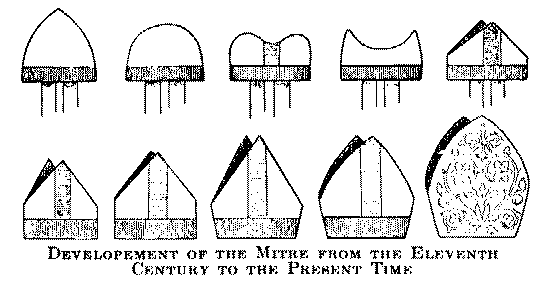
    And if you then showed it to someone from England, you might hear them say, what’s that, a Bishop’s hat?

    https://upload.wikimedia.org/wikipedia/commons/1/17/Mitre_evolution.gif

    And if you showed it to someone from France, you might hear them say, what’s that, a hat for a jester, the court fool?

    http://a401.idata.over-blog.com/0/26/53/98/logos/eeg.jpg

    Here Bruno Fauditti has swapped a jester’s hat for a metal funnel:
    https://fr.wikipedia.org/wiki/Temp%C3%AAte_sur_l%27%C3%A9chiquier

    Now in modern Western chess, this piece doesn’t hop a little way, it can run right across the board. So the Germans adopted a different name for this piece, Läufer, the runner. There used to be played a version of chess in some parts of Germany which had both the old short-hopping Bishop, and the new long-running Currier, and that variant is called Courier Chess.

    http://www.chessvariants.com/historic.dir/courier.html

    There is a famous painting of some people playing this game:
    https://en.wikipedia.org/wiki/Courier_chess#/media/File:Lucas_van_Leyden…

    The Chinese form of chess still keeps the original piece with its original move; in fact, the name of the game, Xiang-Chi, means the Elephant Game.

    https://en.wikipedia.org/wiki/Xiangqi

  • |

    3 Nov

    Could I gently remind you to pay for the season if you haven’t already?

    Puzzle of the week: mate in one move — reckoned to be one of the hardest!

    Hints (click-drag-select to view):

    1. Black’s last move was with a pawn
    2. The e-pawn
    3. From e7
    4. eep…


  • The chess family tree

    Last week the juniors saw the game of Shogi played. It’s the sort of chess played in Japan, and by our new friends Kaz and Hatzune. How is Shogi related to the sort of chess that we normally play?

    When I first looked at the history of Western Chess, I thought that the original game was Chaturanga, a game played in India before 600AD. Chess as played in other countries seems to come from the Arab form of Chess called Shatranj. And that is what I used to tell people.

    Chaturanga --> Shatranj --> Medieval chess --> Modern Western chess
                            ---------------------> Chinese Chess (Xiang-Chi)
                            ---------------------> Japanese Chess (Shogi)
    

    But I now believe that the best picture that fits what we know says that Chaturanga and Shatranj were both later forms of an original game, which we don’t know much about.

    Sort-of-Chess --> Chaturanga 
    --> Shatranj --> Medieval chess --> Modern Western chess
    ---------------------> Chinese Chess (Xiang-Chi)
    ---------------------> Japanese Chess (Shogi)

    There are lots of different sorts of chess around the world that seem to come from the same stock, including:

    Shatar (Mongolian Chess)
    Sittuyin (Burmese Chess)
    Makruk (Thai Chess)

    Each form of chess seems to have its own special rule that makes the game come alive. Burmese chess is the only sort of chess where you can decide where to put your pieces at the start of the game; Japanese chess is the only sort of chess that uses the ‘drops’ that we see in Exchange Chess; Chinese Chess is the only sort of chess that has the Cannon piece; modern Western Chess is the only sort of chess that has the super-duper Queen. (In fact, our game used to be called le Jeu de la Dame enragée — the game with the Mad Queen.)

    You can read about all these different sorts of chess here:
    http://chessvariants.org/
    http://www.ancientchess.com/page/free-downloads.htm

  • Exeter Juniors (1-3) Exeter School, 11th March 2011

    Lots to enjoy in an evenly matched contest.

    Board 1

    {A well-played game by both sides. We don’t see close endgames very often in
    junior chess, and this was a fine one.}

    Board 2

    {Black gets a plus in the opening but gets his wires crossed.}

    Board 3

    {The two sides emerge from a stodgy old opening into a stodgy old middlegame
    and then a roughly level endgame. White adds some interest by losing a piece
    (and it could have been worse!) but makes good use of his chances and
    eventually brings off a swindle.}

    Board 4

    {The game was close for quite a while, with one side then the other looking
    better. Black lost a piece but correctly went on the attack, looking for
    tactics or a perpetual. White survived all the threats and spotted a chance
    for checkmate, and it was all over.}

  • Two puzzles


    (Black pawns coming down the board)

    (Black pawns going up the board)
    Bennett, Frederick — The Australasian


    Solutions:

    1.Bc6!

    1.Kf3!

  • Exeter Juniors 1½-2½ Sidmouth UPDATED

    UPDATE: Taylor’s game added

    {White avoided an early Queen swap, which might have been a nuisance, but it
    was a move leading out of the frying pan into the fire.}

    {Black improvised in the opening and while trying to sort out the position
    wasted a lot of the time that should be used to develop and get castled.
    White crashed through the middle to win.}

    See also: http://exeterchessclub.org.uk/content/making-it-you-go-along

    {An early mistake by Black left White needing only to avoid an accident to win}

    {Black wasn’t playing badly but overlooked a few simple threats by White to go
    a Rook, a Knight and a few Pawns behind. White should have won easily enough
    after that but somehow lost hold of both the Rook and the Knight and then
    chose not to swap off the Queens. A draw was a generous outcome!}