Our first match

Our First Match

Well, ouch! We lost four-nil, but I hope you thought that, however
big and strong they were, they weren’t that much better than us, and
they didn’t do anything very special to beat us. (Is that a good
thing?)  But I was very pleased and proud with how well you
played, how well you fought, and how well you concentrated.  It
wouldn’t have needed much luck for us to come away with 2-2. 
They’re just tall, that’s all…

http://www.youtube.com/watch?v=di1-bB1w4wM

In the end, we fell
for a few simple tactics and there were a couple of chances that we
missed, and that all comes with time and practice.
The best books to start to practice spotting tactics are the blue one I
wrote with Tim ([b]Chess Puzzles in One
Move[/b]) and a yellow book by Tony Gillam, [b]Simple Chess Tactics[/b]. If you think
those are too easy, try the website http://chess.emrald.net/

These will help, but the main thing is to [b]think for both sides[/b]. There’s
no point in spotting all the ideas for your side, but ignoring what
your opponent can do to you.   Check each check and each
capture on every move.

Also, we do need some better openings to put pressure on our
opponents. I have written a little guide that I think I’ve given to all
the team players, but everyone can have a copy
[url=/chessx/ftp/JuniorRepertoire.pdf]PDF[/url]
if they like. The idea is
to play the Scotch Gambit against 1…e5 and to go for IQP positions
against everything else.

[blockquote]
“[em]There are no hopeless positions; there are only inferior positions
that can be saved.

There are no drawn positions; there are only equal ones in which you
can play for a win.

But at the same time, don’t forget that there is no such thing as a won
position in which it is impossible to lose.[/em]”

— Grigory SANAKOEV
[blockquote]
“[em]Playing safe is too dangerous[/em]” — Dr.Dave.

Click on […] to see list

Similar Posts

  • Exeter Juniors 1-3 Exeter School 22nd May 2015

    Exeter Juniors 1-3 Exeter School 22nd May 2015

    default 0-1 Leif HAFSTAD
    Ethan HWANG 1-0 Henry COLEMAN
    Felix WATTS 0-1 Redmond COLEMAN
    Ned RICHARDS 0-1 Nick ARMSTRONG

    In a close match, where many of the players relied for support on a
    mysterious brown elixir, the visiting team had an early boost when the
    home team top board didn’t arrive.

    It looked as though the home team was going to score a rapid equaliser
    when a mate-in-one appeared on board 3, but the opportunity passed by.
    The material balance wobbled several times before Redmond found a
    back-rank mate later in the game.

    Some excellent aggressive play from both sides on board 4 was also
    brought to a close when Nick spotted a snap mate.

    In the best game of the match, Henry tripled down the e-file, pinning
    down all of Black’s pieces. Ethan then sent his Queen off in search of
    counterplay, but it became cut off from the e-file, whence White could
    have delivered the fatal blow. But the Queen proved distracting
    enough, and gradually Black unhooked the pin and exchanged off
    into a Rook endgame. White then allowed a Rook exchange when Black had
    a distant passed pawn, and the home team finally scored a point.

    Games to follow.

  • Said the Elephant to the Bishop…


    “What’s this piece called?”
    “A Bishop.”
    “What is it in Spanish, Sophie?”
    “Alfil”
    “And in French, Agathe?”
    “Fou!”

    Therein lies a story…

    The old Arab form of chess had a piece called the elephant, which, unlike most elephants I know, could jump two squares at a time, diagonally. And ‘al-fil’ means the Elephant in Arabic (Pil in Persian).

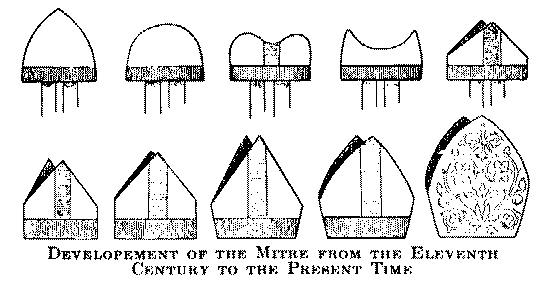
    But if you have a lump of stone, or wood, and you want to show that it is an elephant, you might carve two curving lines on it for tusks, or make two points on it to show the same.

    And if you then showed it to someone from England, you might hear them say, what’s that, a Bishop’s hat?

    https://upload.wikimedia.org/wikipedia/commons/1/17/Mitre_evolution.gif

    And if you showed it to someone from France, you might hear them say, what’s that, a hat for a jester, the court fool?

    http://a401.idata.over-blog.com/0/26/53/98/logos/eeg.jpg

    Here Bruno Fauditti has swapped a jester’s hat for a metal funnel:
    https://fr.wikipedia.org/wiki/Temp%C3%AAte_sur_l%27%C3%A9chiquier

    Now in modern Western chess, this piece doesn’t hop a little way, it can run right across the board. So the Germans adopted a different name for this piece, Läufer, the runner. There used to be played a version of chess in some parts of Germany which had both the old short-hopping Bishop, and the new long-running Currier, and that variant is called Courier Chess.

    http://www.chessvariants.com/historic.dir/courier.html

    There is a famous painting of some people playing this game:
    https://en.wikipedia.org/wiki/Courier_chess#/media/File:Lucas_van_Leyden…

    The Chinese form of chess still keeps the original piece with its original move; in fact, the name of the game, Xiang-Chi, means the Elephant Game.

    https://en.wikipedia.org/wiki/Xiangqi

  • Exeter Juniors ½-3½ Tiverton Testosterones

    {A terrific scrap where both sides took and missed their chances. In the end
    the struggle with the 32 pieces on the board was decided as much by the clock
    as by the moves.}

    {White played an unknown system and got a bit lost. Trying to save a pawn,
    White lost one piece and should have lost another. The position settled down
    with Black dominant, and White never really had a chance.}

    See also: http://exeterchessclub.org.uk/content/making-it-you-go-along

    {Black wins a pawn but misses a discovery to lose a piece. Black keeps going
    and eventually finds a perpetual check.}

    {White started very well but the position became blocked and difficult.
    Trying to get something going, you played a poor move, and things then went
    from bad to worse.}

  • EJCC 2-2 Newton Abbot Juniors 16th Dec 2011

    One of the best and best-contested matches I’ve had the pleasure to watch. Well done to all players!

    W Royle ½-½ Fraser
    B Trott ½-½ Whitehead
    S Keat 1-0 Ramesh
    B Terrill 0-1 Chornenkyy

    A tough game fought in the jungles of a hypermodern opening, in the end Black’s
    exchange was enough to balance an advanced passed pawn – or maybe the
    other way around!

    A wild game where both sides did enough to win…

    Some devilishly complicated opening play resulted in an early win of a
    piece for White.

  • Yet more local junior success

    n the Clubs/Organisations competition as part of the UK Chess Challenge, Exeter Junior Chess Club came out as South-West region winners.  Well done to them!

    South West  
    RankSchoolScoreNo. of PlayersGF QualifiersTF Qualifiers
    1Exeter Junior Chess Club21421
    2Bournemouth Junior Chess Club19321
    3Downend & Fishponds Chess Club17.5221
    4Frome Chess Club14220
    5Musketeers Junior Chess Club10210
    6Pete’s Potentials Chess Club8.5110
    7Wellington Chess Club7110
    8Wotton Hall Chess Club7110
    9Moonrakers Chess club6200
    10Ringwood Chess club5.5110
  • Chess around the world

    I had a nice chat at the Spring tournament with Dr Pasupalety and Mr Sequiera, both of whom grew up playing chaturanga. This is thought to be the ancestor of many types of chess played now across the world.

    Chaturanga is a slow game, where the pawns can move only one square, there is no such thing as castling, and the Queen, called a Minister, is the weakest piece on the board!  The Bishops (Camels, or in some places Elephants) also had a different move.  When chess first came to Europe, it was in a form quite like this, and medieval chess had this same slow style.

    When Western chess-players started experimenting in the opening in the 1920s, they invented some defences where Black stayed away from the centre for a while, and these set-ups look like the set-ups used in chaturanga.  And that’s where we get the names King’s Indian Defence, Queen’s Indian Defence, and so on.

    When I first looked at the history of Western Chess, I thought that the original game was Chaturanga, a game played in India before 600AD. Chess as played in other countries seems to come from the Arab form of Chess called Shatranj. And that is what I used to tell people.

    But I now believe that the best picture that fits what we know says that Chaturanga and Shatranj were both later forms of an original game, which we don’t know much about. And whether China and Japan learned about chess from India or the Arab world, I don’t know.

    We know lots about shatranj, because there is a lot of writing about it.  Although the players were playing a different game, we can tell from their analysis that they were as good at shatranj as grandmasters are at chess.  In fact, al-Suli composed a chess problem that took hundreds of years for anyone to solve!

    I had thought of shatranj and chaturanga as part of chess history, so I was very tickled to meet people who had grown up with chaturanga as a living game.

    There are lots of different sorts of chess around the world that seem to come from the same stock, including:

    • Shatar (Mongolian Chess)
    • Sittuyin (Burmese Chess)
    • Makruk (Thai Chess)

    Each form of chess seems to have its own special rule that makes the game come alive. Burmese chess is the only sort of chess where you can decide where to put your pieces at the start of the game; Japanese chess is the only sort of chess that uses the ‘drops’ that we see in Exchange Chess; Chinese Chess is the only sort of chess that has the Cannon piece; modern Western Chess is the only sort of chess that has the super-duper Queen. (In fact, our game used to be called Le Jeu de la Dame enragée — the game with the Mad Queen!).  Castling, and the double-first-move of the pawn, are also later inventions in the Western tradition.

    You can read about all these different sorts of chess here:
    http://chessvariants.org/
    http://www.ancientchess.com/page/free-downloads.htm