A good start
Great to see faces old and new this evening — welcome to Ernie, Leo N, Orestes and Sophie.
{A terrific scrap where both sides took and missed their chances. In the end
the struggle with the 32 pieces on the board was decided as much by the clock
as by the moves.}
{White played an unknown system and got a bit lost. Trying to save a pawn,
White lost one piece and should have lost another. The position settled down
with Black dominant, and White never really had a chance.}
See also: http://exeterchessclub.org.uk/content/making-it-you-go-along
{Black wins a pawn but misses a discovery to lose a piece. Black keeps going
and eventually finds a perpetual check.}
{White started very well but the position became blocked and difficult.
Trying to get something going, you played a poor move, and things then went
from bad to worse.}
Another close match, well done to all!
Board 1
Board 2
Board 3
Board 4
Welcome to Elliott
We had an unusual game where the Black King charged up the board to e1! This is called a ‘King march’ if the player chooses to do it, or a ‘King hunt’ if the King is chased there.
One of the most famous King hunts was this one:
A close match ended in a 1-3 defeat for the youngsters. As so often in
chess, it wouldn’t have taken much to reverse the score!
The juniors, unusually, fielded a team which had a majority of girls.
{1. A well-fought game: White got some attacking ideas muddled and lost a piece,
but pressure won the exchange leaving an exciting RvNN endgame.}
{2. A carefully-played game ended in a draw, but both sides missed good
chances to go ahead.}
{3. Black was allowed to launch a tactic to win a piece early on, after which White was not allowed much fun.}
{4. Black grabbed a Rook but then seemed to run out of ideas; White then
had an idea and Black missed it!}
Well, a loss for the juniors, but by the narrowest of margins, and
against a team who were a bit stronger than they looked on paper. A
couple of the Gambits players have had much higher grades in the past,
and in the end I think experience told.
“What’s this piece called?”
“A Bishop.”
“What is it in Spanish, Sophie?”
“Alfil”
“And in French, Agathe?”
“Fou!”
Therein lies a story…
The old Arab form of chess had a piece called the elephant, which, unlike most elephants I know, could jump two squares at a time, diagonally. And ‘al-fil’ means the Elephant in Arabic (Pil in Persian).
But if you have a lump of stone, or wood, and you want to show that it is an elephant, you might carve two curving lines on it for tusks, or make two points on it to show the same.
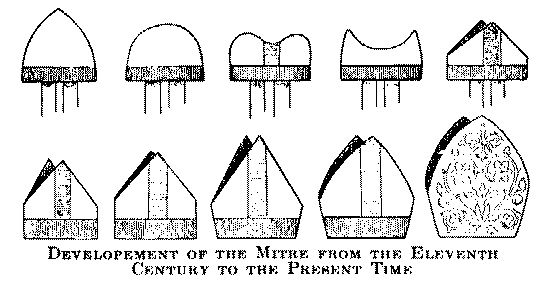
And if you then showed it to someone from England, you might hear them say, what’s that, a Bishop’s hat?

https://upload.wikimedia.org/wikipedia/commons/1/17/Mitre_evolution.gif
And if you showed it to someone from France, you might hear them say, what’s that, a hat for a jester, the court fool?
http://a401.idata.over-blog.com/0/26/53/98/logos/eeg.jpg
Here Bruno Fauditti has swapped a jester’s hat for a metal funnel:
https://fr.wikipedia.org/wiki/Temp%C3%AAte_sur_l%27%C3%A9chiquier
Now in modern Western chess, this piece doesn’t hop a little way, it can run right across the board. So the Germans adopted a different name for this piece, Läufer, the runner. There used to be played a version of chess in some parts of Germany which had both the old short-hopping Bishop, and the new long-running Currier, and that variant is called Courier Chess.
http://www.chessvariants.com/historic.dir/courier.html
There is a famous painting of some people playing this game:
https://en.wikipedia.org/wiki/Courier_chess#/media/File:Lucas_van_Leyden…
The Chinese form of chess still keeps the original piece with its original move; in fact, the name of the game, Xiang-Chi, means the Elephant Game.